How to Play Blackjack: Rules and Beginner's Guide
Blackjack, also known as 21, is one of the most recognisable card games in casinos. Unlike games such as roulette, where the outcome is determined entirely by chance, players' decisions in Blackjack influence how a hand develops and its mathematical probabilities.
The main objective is simple: to form a hand with a total value closer to 21 than the dealer's hand, without exceeding that limit.
However, beyond this basic rule, the game includes different options, special situations and variations.
In this guide, we explain how to play Blackjack, how card values are calculated, what the main actions mean and how classic Blackjack differs from Live Blackjack.
What Is Blackjack?
Blackjack is a card game in which each player compares their hand against the dealer's hand.
The objective is not necessarily to reach exactly 21, but to achieve a better result than the dealer without exceeding that value.
Each round begins with the initial cards being dealt. Players then choose from the available actions, while the dealer follows predefined rules.
Blackjack is available in land-based casinos, digital versions and Live Casino tables.
What Are the Card Values in Blackjack?
To understand the rules of Blackjack, it is important to know how each card's value is calculated.
Card
Value
2 to 10
Face value of the card
Jack (J)
10
Queen (Q)
10
King (K)
10
Ace (A)
1 or 11
The Ace is the only card that can have two different values.
For example, an Ace and a 7 can form a hand worth 18 when the Ace is counted as 11.
If another card is added that would otherwise bring the total above 21, the Ace can instead be counted as 1.
How Does a Round of Blackjack Work?
Although different versions exist, the basic process is similar at most Blackjack tables.
1. Initial Deal
At the beginning of each round, the player usually receives two cards.
The dealer also receives two cards, although how they are displayed depends on the table's rules.
In some versions, one of the dealer's cards remains face down until the players have completed their actions.
2. Choosing an Action
Once the initial cards have been dealt, the player can choose from the available actions, such as Hit or Stand.
In certain situations, additional options such as Double Down, Split or Surrender may also be available.
3. Dealer's Turn
After the players have completed their actions, the dealer follows the table's rules.
Generally, the dealer must draw additional cards until reaching a hand value of at least 17.
Some tables require the dealer to draw another card on a soft 17, meaning a hand worth 17 that includes an Ace counted as 11.
4. Comparing the Results
At the end of the round, the hands are compared.
If the player's hand has a higher value than the dealer's without exceeding 21, the player wins the hand.
If the player's hand exceeds 21, the hand loses regardless of the dealer's final result.
When both hands have the same value, the outcome is called a Push, and the original bet is usually returned.
What Do Hit, Stand, Double Down and Split Mean?
The main actions are an important part of Blackjack's rules.
Hit – Draw Another Card
Choosing Hit means requesting an additional card.
The value of the new card is added to the existing hand.
If the total exceeds 21, the result is called a Bust, and the hand loses.
Stand – Keep Your Current Hand
Choosing Stand means ending your turn and keeping the current value of your hand.
The round then continues according to the table's rules.
Double Down – Double the Bet
Double Down, where permitted, allows the player to double the original bet and receive one additional card.
After taking this action, no further cards can usually be drawn.
The availability and restrictions of Double Down vary depending on the game version.
Split – Divide a Pair into Two Hands
Split is available when the two initial cards meet the table's requirements, usually when they have the same value.
This action separates the cards into two independent hands.
An additional bet is required for the second hand, and specific restrictions may apply.
Surrender – Give Up the Hand
Some Blackjack tables offer the Surrender option.
This feature allows the player to give up their hand under certain conditions, losing part of the original bet, usually half.
Surrender is not available in every Blackjack variation.
What Is a Natural Blackjack and How Does It Differ from a Regular 21?
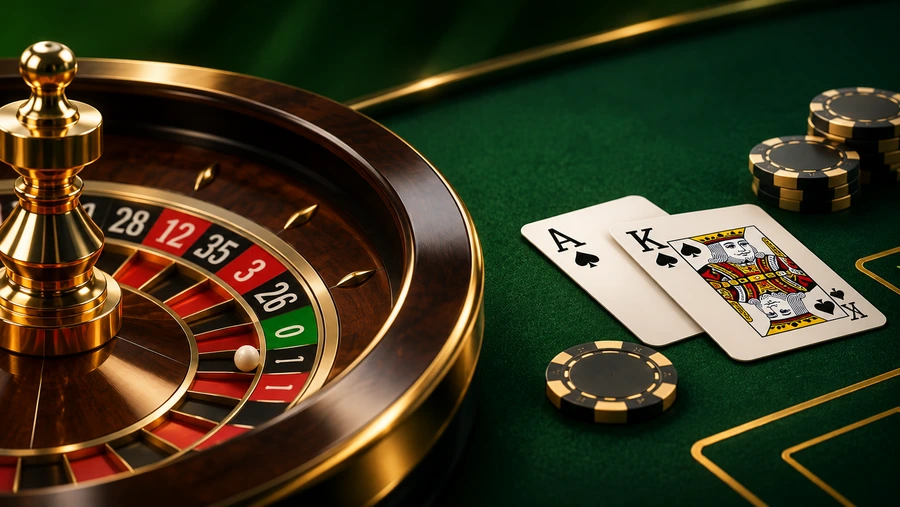
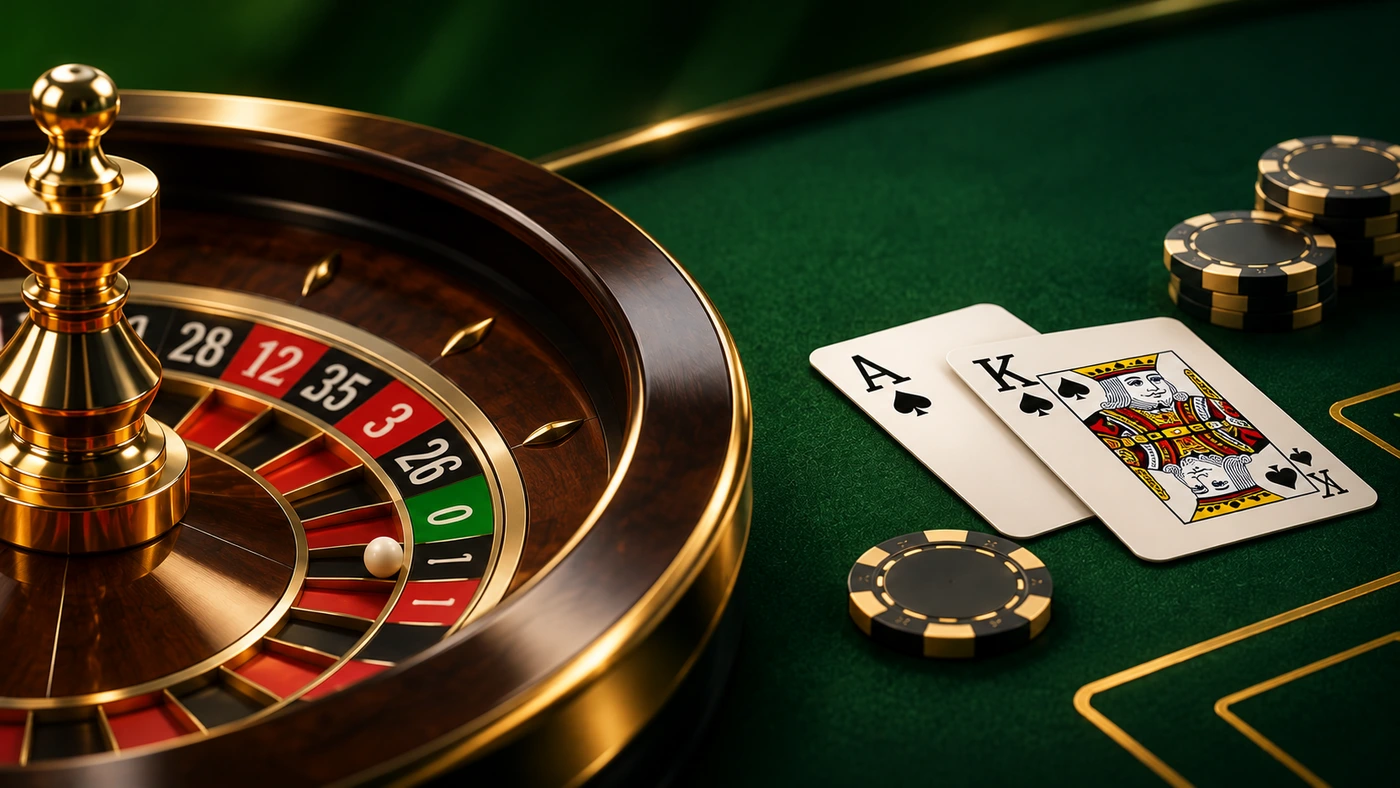
The term Blackjack specifically refers to an initial two-card hand consisting of an Ace and a card worth 10.
This means the hand totals 21 with the first two cards.
A hand that reaches 21 using three or more cards is not considered a natural Blackjack.
This distinction is important because a natural Blackjack may have a different payout from a regular hand worth 21.
The exact payouts are determined by the table's rules.
What Are Hard and Soft Hands in Blackjack?
Blackjack uses two terms to describe the value of a hand.
Hard Hand: A hand without an Ace that can be counted as 11, or a hand in which the Ace must be counted as 1.
Soft Hand: A hand containing an Ace that can be counted as 11 without the total exceeding 21.
For example:
- Ace and 6: Soft 17.
- 10 and 7: Hard 17.
- Ace, 9 and 7: Hard 17, because the Ace is counted as 1.
This distinction affects the available decisions and how certain rules are applied.
What Are the Main Differences Between Online and Live Blackjack?
Blackjack is available in different formats.
In digital Online Blackjack, the cards and gameplay are presented through software.
In Live Blackjack, the cards are dealt by a real dealer, and the game is streamed through live video.
Players use the digital interface to select their available actions.
Although the basic rules are similar, differences may exist in the number of decks, dealer rules, payouts and additional options.
What Is Basic Strategy in Blackjack?
Basic Strategy is a mathematically derived set of decisions based on the value of the player's hand and the dealer's visible card.
Its purpose is to minimise the player's expected mathematical disadvantage under a specific set of rules.
However, Basic Strategy does not guarantee winnings or eliminate financial risk.
Furthermore, the mathematically appropriate decisions may vary depending on the rules of the table.
Is Blackjack a Game of Chance or Skill?
Blackjack combines random outcomes with decisions that influence the probabilities.
Players cannot control the order of the cards, but the available actions affect the mathematical expected return of each hand.
This does not mean that outcomes can be predicted or that any method can guarantee winnings.
Frequently Asked Questions About Blackjack
What is the objective of Blackjack?
The objective is to form a hand with a value closer to 21 than the dealer's hand, without exceeding 21.
How much is an Ace worth?
An Ace can be worth either 1 or 11, depending on the total value of the hand.
What does Hit mean?
Hit means that the player requests an additional card.
What does Stand mean?
Stand means that the player keeps their current hand and does not request another card.
What happens if a hand exceeds 21?
The result is called a Bust, and the hand loses.
What is a natural Blackjack?
A natural Blackjack is an initial two-card hand consisting of an Ace and a card worth 10.
Is Live Blackjack different from classic Blackjack?
The basic rules are similar, but Live Blackjack uses a real dealer and a live video stream. Specific rules may vary depending on the table.
Is there a strategy that guarantees winnings?
No. Even mathematically supported Basic Strategy does not guarantee a positive outcome.
Conclusion
Blackjack is a card game that combines straightforward basic rules with different decisions throughout each round.
Understanding card values, actions such as Hit, Stand, Double Down and Split, and the dealer's rules provides the foundation for understanding how the game works.
Although players' decisions influence the mathematical probabilities, outcomes remain uncertain, and participation involves financial risk.
Gambling is strictly intended for individuals aged 21 and over in Greece. Participation involves financial risk and should not be considered a source of income.
Challenge Zone
0 games available